Media Strategy♥ Support
Before we call the tool evil
When we label manipulation and propaganda evil, we stop teaching ordinary people how minds are shaped.
The tool does not disappear. It just leaves the classroom, the dinner table, and the honest creator's toolkit.
media network · the power of narrative
1 / 51
The asymmetry

There aren't bad words, there is a bad use of words

ethical Individuals

Refuse the vocabulary.

They avoid the words, avoid the mechanics, and hope truth wins unaided.

lawless operators

Study the machinery.

They do not limit themselves to your moral code. They keep shaping minds while decent people are taught to look away.

A free society needs ethical people fluent in influence, persuasion, repetition, framing, and narrative defense.
media network · the power of narrative
2 / 51
The Operating System
Layer 1: The SW
THE SOFTWARE. Subversion, morality, and ideology: the software that decides what facts mean before the kernel enforces them.
media network · the power of narrative
3 / 51
dictionary
word
What does it mean?
mechanism
What does it do?
misuse
Who owns it after subversion?
test
Where does the word take the listener?

Definitions first.
Nobody gets to argue with
stolen words.

A word gets stolen when it keeps its letters but gets a new owner and a new destination — you will watch it happen a few slides from now, when “We the people” is walked from “limits on government” to communism. You cannot win an argument conducted in words the other side has already redefined. So before anything else, this chapter pins each of the seven words to what it actually means.

4 / 51
media network · the power of narrative
I Question
Wait, so whoever writes the dictionary rules the world?
Wait, so whoever writes the dictionary rules the world? Yes. He who controls the definitions controls the debates. If you allow your enemy to define the words, you have already lost the argument before you speak. Just look at Josephus having to invent 'theocracy' because the Greeks had no word for a system ruled by Law.
Definition · 1 of 8 · changes ownership
Subversion
A systematic attempt to overthrow or undermine a government or political system by persons working secretly from within.
Definition · 1 of 8
Same words.
New owner.
New destination.
Subversion
The act of undermining or overthrowing an established system — such as a government or established norms.
This already happened to you.
media network · the power of narrative
5 / 51
Subversion · the original meaning
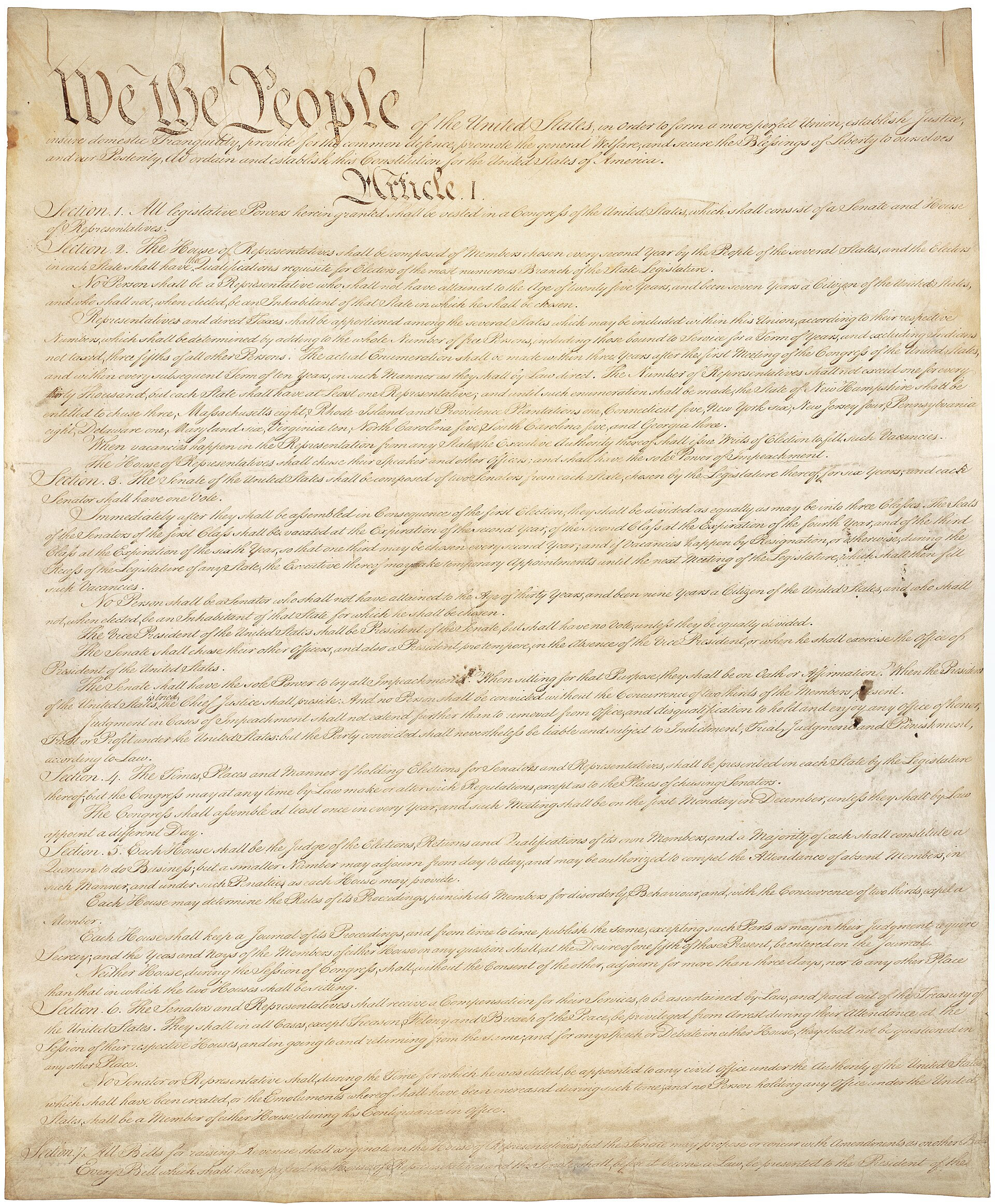
Franklin constitution document
origin checks power

'We the people'

The Constitution implemented a mechanism of checks & balances.

"...In these Sentiments, Sir, I agree to this Constitution, with all its Faults, if they are such: because I think a General Government necessary for us… and can only end in Despotism as other Forms have done before it, when the People shall become so corrupted as to need Despotic Government, being incapable of any other… For when you assemble a Number of Men to have the Advantage of their joint Wisdom, you inevitably assemble with those Men all their Prejudices, their Passions, their Errors of Opinion, their local Interests, and their selfish Views. From such an Assembly can a perfect Production be expected?"

— Benjamin Franklin · 1787
media network · the power of narrative
6 / 51
Subversion · the start
Step 1 · the addition

Bill of Rights

Written due to outside pressures — the title reflects it, but the content is smart.

Amendment I
Congress shall make no law respecting an establishment of religion, or prohibiting the free exercise thereof; or abridging the freedom of speech, or of the press; or the right of the people peaceably to assemble, and to petition the Government for a redress of grievances.
Amendment II
A well regulated Militia, being necessary to the security of a free State, the right of the people to keep and bear Arms, shall not be infringed.
media network · the power of narrative
7 / 51
I Question / Historical Context
Click to expand notes (2)
Wait, so how does 'rewriting history' fit into this? Isn't that just lying? Not in their operating system. If ideology dictates that the tribe's survival is the highest good, then a historical narrative that empowers the tribe is 'true', and one that harms it is 'false'. Demanding they stick to objective facts is like speaking French to a calculator. This is the difference between Tribal Truth and Law Truth.
Wait, what "outside pressures" forced them to write the Bill of Rights? The original Constitution did not have one. The framers actually thought listing rights was dangerous, because it implies the government gives you those rights (and therefore can take them away). But the Anti-Federalists refused to ratify the Constitution unless there was an explicit, written restriction on government power. The title says "Rights", but the text says "Congress shall make no law." It is a restraining order on power.
Read it correctly
the good

Free speech and the right to bear arms are tools the people hold against power — not gifts that power hands down.

Law measures government; citizens hold the tool.
Limit the government
Power belongs to citizens
The expectation is agency.

The hidden mechanism, in one move.

media network · the power of narrative
8 / 51
I Question
Wait, if the Victim/Oppressor matrix deletes agency, why ...
Wait, if the Victim/Oppressor matrix deletes agency, why is it so popular? Because agency is exhausting. It requires responsibility, accountability, and relentless inquiry. The matrix offers a highly seductive alternative: infinite moral purity with zero personal responsibility.
Step 2 · the campaign

From limits on the government
→ to "people's rights."

This psychological hack opens the door to ever-increasing demands from the government.

Bill of Rights document
The expectation is entitlement.
media network · the power of narrative
9 / 51
Clarifications / I Question
Click to expand notes (2)
Wait, aren't people's rights a good thing? Yes, but shifting the language from "the government is restricted" to "the people are entitled" fundamentally flips the power dynamic. Entitlement requires a provider, turning the government into a distributor rather than a constrained servant.
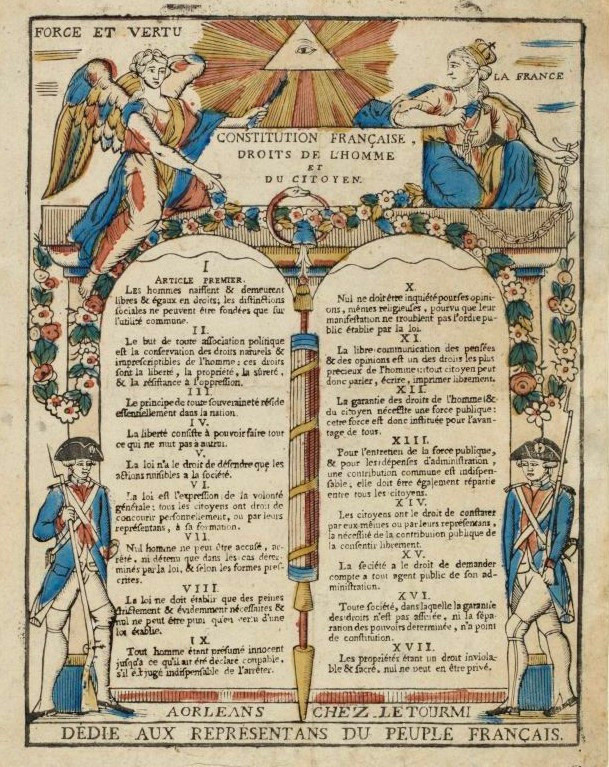
Wait, isn't declaring that 'power belongs to citizens' exactly what the French Revolution did? Why was that bad? Because the French 'Declaration of the Rights of Man' decreed that all sovereignty resides in the *nation* (the collective). When the collective grants rights, the collective can take them away—which is exactly what happened during the Reign of Terror. Morality without Law collapses into tyranny. The American Bill of Rights was entirely different: it didn't say the nation grants rights; it said 'Congress shall make no law,' placing a hard boundary on government regardless of what the collective wants.
Step 3 · subversion

"We the people" = Communism.

We the people banner over crowd
Same words.  New owner.  New destination.

True words, kept word-for-word — reordered until they end somewhere you'd never have agreed to go. Nobody lied. Only the meaning was swapped.

media network · the power of narrative
10 / 51
Clarifications / I Question
Click to expand notes (3)

Wait, so subversion isn't about spreading fake news or lying? Exactly. Fake news is easy to spot and debunk. Subversion is far more dangerous because it uses 100% true facts and exact vocabulary, but stealthily changes the definition of those words. By the time you realize the destination has changed, you're already using their map.
Isn't democracy people's rule? If 'We the People' is the highest authority, then 51% of the people can legally vote to enslave the other 49%. If there is no Objective Law above the people, democracy is just mob rule with a ballot box. Watch how this issue was solved →
Wait, are you saying democracy is a bad thing? No, but democracy is just multiple kings competing for the crown. Athenes had plenty of slave to tule over.
Trap · lexical effect

Once the word is adopted, the premise travels inside it.

1 · Lexical Selection

The Dictionary Hack: bake the premise into a noun.

2 · Standardization

The Bureaucratic Autopilot: embed the noun in procedure.

3 · Linguistic Relativity

Closing the Exits: delete the vocabulary required to critique it.

The ideology is swallowed whole. You no longer have to debate the premise; you just have to get people to use your dictionary.

CDA and framing research both support the idea that word choice can normalize assumptions before an explicit argument begins.

Subversion · in the field
mamdani
"They actively think of ways to introduce new concepts — and change the meaning of existing ones."

For more subversion examples, call my friend Ariel, who infiltrated leftist groups and recorded how they actively engineer new concepts.

media network · the power of narrative
12 / 51
I Question
Wait, why do they steal our words instead of just inventi...
Wait, why do they steal our words instead of just inventing their own? They do invent words—sometimes by splitting a term in two and making it contradictory so that you lose the term forever (see the Win Condition). They invent terms like 'religion' to falsely couple worship and morality. They invent terms like 'human rights'. And they revive old terms to rewire history.
Subversion · linguistic roots
Languages with a root system leave traces and clues to what a meaning is. Does English have a root system?
media network · the power of narrative
13 / 51
I Question
Does English have a root system?
Does English have a root system? Yes, English uses root words as the base for building vocabulary. However, unlike languages with rigid consonantal roots (like Hebrew or Arabic), English mostly relies on borrowing and compounding. Its words stem from three primary layers: Germanic, Latin, and Greek. English features two types of roots:
1. Free Roots: Stand-alone words that can be used independently without any additions (e.g., dog, kind).
2. Bound Roots: Units that carry core meaning but cannot stand alone; they must be paired with prefixes or suffixes (e.g., ject in eject or reject).
Subversion · lost in translation
English Hebrew
Justice צדק (Tzedek)
Righteous צדיק (Tzadik)
Right נכון (Nachon)
Correct נכון (Nachon)
Right צודק (Tzodek)
Just צודק (Tzodek)
English Hebrew
Rights ?
Charity צדקה (Tzdaka)
Justification הצדקה (Hatzdaka)


Can you
demand
charity?

A root system is the system.
media network · the power of narrative
14 / 51
Clarification / Question
Click to expand notes (4)
Semantic warfare When you say Charity/Tzedakah you are pointing out that "this money comes from somewhere". while Rights are an abstract legal status, Charity (taxes) requires a pipeline of material resources. This reveals exactly how languege is used to manipulate public perception of scarcity, economics, and power.
Can you demand charity? The Linguistic Paradox of "Tzedakah"
In Western languages like English, charity comes from the Latin caritas (dearest love/affection). It implies a voluntary act of mercy or pity.
Therefore, in English, you cannot demand charity, because if you force someone to give it, it is no longer an act of voluntary love.
But in Hebrew, Tzedakah (צדקה) does not mean charity. Because it comes from the root צ-ד-ק, it literally means "doing what is just."
It is an obligation, not a favor: In the Hebrew worldview, giving money to the poor is not a nice, optional thing you do out of the goodness of your heart. It is the restoration of cosmic justice. The world is out of balance because one person has too much and another has too little. Giving Tzedakah is simply balancing the scales.
Yes, it can be demanded: Because Tzedakah is a structural requirement of justice, historical Jewish communities could legally tax citizens and force them to give Tzedakah to support the poor.Why "Rights" (זכויות) Breaks the Root SystemNotice that when English speaks of human rights, it uses a variation of the word right (as in morally correct/straight).Hebrew completely separates these concepts:צדק (Justice): What you owe to the world to keep it moral.זכות (Right/Entitlement): What the world owes to you based on your merit or existence.By using the root ז-כ-ה (purity/merit/winning) for "rights," the language structurally implies that a "right" is a credit or a privilege that protects you, whereas "justice" (צדק) is a heavy, collective moral duty.How a Subversive Manipulates ThisIf an authoritarian regime in this root system wants to subvert its people, they exploit הצדקה (Justification).Because Hatzdakah shares the exact same root as Tzedek (Justice), a dictator can use state media to label a violent crackdown as an act of Hatzdakah (justification/rationalization). To the human ear, because the holy root צ-ד-ק is vibrating inside the word, the violent act is subconsciously masked as an act of cosmic Justice, even when it is pure oppression.
Why "Rights" Breaks the Root System? Notice that when English speaks of human rights, it uses a variation of the word right (as in morally correct/straight).Hebrew completely separates these concepts:
צדק (Justice): What you owe to the world to keep it moral.
זכות (Right/Entitlement): What the world owes to you based on your merit or existence.
By using the root ז-כ-ה (purity/merit/winning) for "rights," the language structurally implies that a "right" is a credit or a privilege that protects you, whereas "justice" (צדק) is a heavy, collective moral duty.
How a Subversive Manipulates This (English and Hebrew have this one in common)

If an authoritarian regime in this root system wants to subvert its people, they exploit הצדקה (Justification). Because Justification shares the exact same root as Justice, a dictator can use state media to label a violent crackdown as an act of Hatzdakah (justification/rationalization). To the human ear, because the holy root צ-ד-ק / justice is vibrating inside the word, the violent act is subconsciously masked as an act of cosmic Justice, even when it is pure oppression.
I thought Jews were smart? Why did they enable demanding charity? If you are looking at the pragmatic, functional side of the equation. What looks like moral or ideological framing on the surface is actually a highly practical mechanism to keep capital flowing and stimulate the economy.
When a language system tethers charity to structural justice, it changes how money moves through society in three distinct economic ways:
1. Preventing Wealth Stagnation (The Velocity of Money)
In economic terms, an economy stalls when wealth piles up at the top and stops moving. Wealthy individuals have a low marginal propensity to consume—they hoard or invest heavily rather than spend on daily goods. Poor individuals spend every cent they get immediately on survival. The Economic Mechanism: By framing Tzedakah (charity) as a legal and moral obligation, the language system builds a cultural mandate that forces wealth down to the lower tier of the economy.
2. A Decentralized Social Safety Net
If a society relies purely on "charity" (voluntary love), funding for the vulnerable is unstable, unpredictable, and crashes during recessions when people feel less generous. The Economic Mechanism: By treating the redistribution of funds as an unyielding structural requirement (Tzedek), the community stabilizes its own safety net without needing a massive, bureaucratic government tax office. The Result: It keeps the labor pool alive, reduces extreme poverty-driven crime, and ensures that workers who hit hard times can recover and re-enter the market. It acts as an economic insurance policy funded directly by localized capital.
3. Creating Market Trust

Markets cannot function without trust and stability. If the gap between the rich and the poor becomes too severe, it leads to riots, revolutions, and the total destruction of property and commerce. The Economic Mechanism: Forcing money to move under the banner of "justice" cools down class warfare. The Result: The wealthy pay a localized "tax" that secures their position and protects their businesses from civil unrest, while the less fortunate receive the capital necessary to participate as consumers in the economy.
Loaded terms are not worth the time - if one definition doesn't exist, move on

What subversion is not.

1. It is NOT Projection

Example: "Zionism is colonialism."

This is an adversary projecting their own logic. Western and Islamic imperialists both operate on an imperialist logic, so "colonialism" makes perfect sense to them. Subversion is strictly taking your word (like "human rights") and secretly changing who owns it.

2. It is NOT Lying

Fake news is easy to spot and debunk. Subversion is far more dangerous because it uses 100% accurate facts and exact vocabulary, but changes the definition of those words. By the time you realize the destination has changed, you're already using their map.

3. It is NOT Persuasion

Persuasion tries to change your mind using arguments. Subversion bypasses your mind entirely by changing the vocabulary before you even start arguing. Nobody lied; they just swapped the meaning while you weren't looking.

media network · the power of narrative
15 / 51
I Question
Wait, if subversion changes the map, doesn't that mean we...
Wait, if subversion changes the map, doesn't that mean we can just 'educate' people back to the right map? No, because loaded terms can't be used. Hebrew embeds meaning through its root system, but every language needs to create a mechanism for itself. You cannot use a corrupted word to fix a corrupted map. This is why translation drift is so dangerous.
Presentation Bridge

Music Theory: Installing Habits

Before looking at Morality, see how culture embeds these structural roots. You don't need history or politics to understand a civilization—just listen to how they build character through song.

Present deck →
Definition · 2 of 8 · decides protection
Morality
The moral layer decides what kind of human being the system is trying to produce.
Definition · 2 of 8
Deciding what should be
protected, punished, praised.
Morality
The moral layer decides what kind of human being the system is trying to produce.
Morality is not sentiment. It is the direction of judgment.
media network · the power of narrative
16 / 51
I Question
Click to expand notes (2)
Wait, isn't morality just about being kind? Kindness is a sentiment; morality is an architecture. Morality decides the direction of judgment: who gets protected, who gets punished, and who gets praised. If you define morality as mere kindness, you will eventually be manipulated into protecting the aggressor and punishing the victim.
Wait, so if morality directs the immune system, does that mean 'tolerance' can actually be an autoimmune disease? Exactly. If the moral layer is corrupted to believe that protecting the society is 'oppressive,' the society's immune system will attack its own defenses. Absolute tolerance requires tolerating the people who want to destroy you. This is why the Law Enforces Uniformity.
Morality, in practice
I asked AI to set

editorial standards + credibility guardrails.

Truth standard
Factual, sourced, willing to acknowledge hard things. No fabricated personas, no astroturf.
Transparency
Disclose who funds and runs the network. Covert advocacy invites the "propaganda" attack.
Editorial independence
Funders set the mission, not the content.
MISSION: MAKE BRITAIN GREAT AGAIN 
media network · the power of narrative
17 / 51
Interrogating the answer

Take just the truth standard. Is this good?

Truth standard
Factual, sourced, willing to acknowledge hard things. No fabricated personas, no astroturf.

At face value — Yes.

"Factual & sourced"
is not value-free.
A meaning was chosen before you ever arrived. Watch the first move.
media network · the power of narrative
18 / 51
Path A · the truth, no frame
The bad
Fact 1  ·  [TRUE]  
"Britain ran slavery."
audience connects the dots — and supplies the meaning.
↘ 50% drop out here

& the darkest narrative travels fastest.

"Britain  is evil."
Let's argue back.
First attempt:

Britain ended the slave trade worldwide alone, while others were burning widows.

Unchecked, empowerment overshoots → "We're better than everyone. Let's colonize the world!"  
media network · the power of narrative
19 / 51
Now ask "what does it mean?" — first
The good
Fact 1+2, framed · [TRUE]
Britain did slavery — then vigorously fought slave trade worldwide and made it illegal.
→ "A tiny island can make the whole world better."

The rebuttal - 
meets agency.

Fact 2 · [TRUE - ish]
Britain created Pakistan
stay humble and continue the mission
Agency. Not shame. WE WIN.
We are past this point.
media network · the power of narrative
20 / 51
I Question
Wait, if the Victim/Oppressor matrix deletes agency, why ...
Wait, if the Victim/Oppressor matrix deletes agency, why is it so popular? Because agency is exhausting. It requires responsibility, accountability, and relentless inquiry. The matrix offers a highly seductive alternative: infinite moral purity with zero personal responsibility.
"Britain stopped slavery!" — did it?
The ugly

The current
framework.

"Nothing we can do. It's not like Pakistan is here."
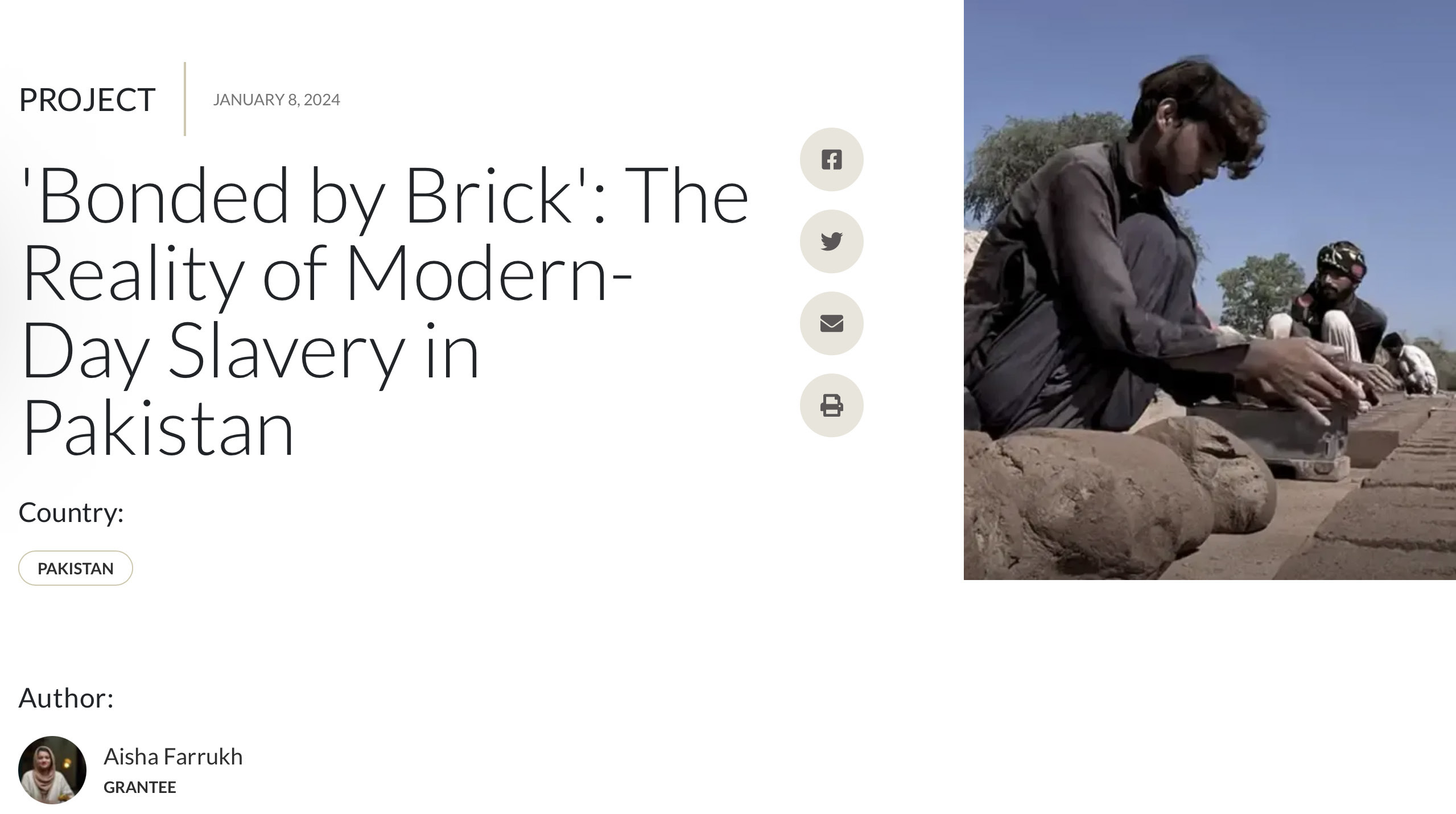
Bonded by Brick: modern-day slavery in Pakistan
Scoop [allegedly TRUE]
Prince Andrew & the elites (vague) — tied to human trafficking, today.
…so what does it mean?
↘ 50% drop out and say Britain is as good as Pakistan

A new fact enters — and the existing frame eats it.

(↘ and 50% won't even listen to begin with)

media network · the power of narrative
21 / 51
The bottom of the spiral
↘ ~95% have landed here
Fact 2  ·  [TRUE]  +  a reminder  ·  [def. TRUE]
Slavery is everywhere & we don't know what you don't know.  
"Humanity is bad."

"If humans are bad, why give birth?" — every fact true, the destination is despair.

MISSION ACHIEVED? ✓ BRITAIN NOT EVIL. ✕ HUMANITY EXTINCT.

Truth without purpose
trends toward nihilism.

media network · the power of narrative
22 / 51
I Question
Wait, why do slogans always win against complex arguments?
Wait, why do slogans always win against complex arguments? Because slogans aren't designed to convey information; they are designed to signal tribal loyalty. Answering a slogan with a complex fact is useless because you are playing an information game while they are playing a survival game.
Creator expectation · what goes wrong
A creator can follow the brief to the letter and still deliver the wrong meaning.
Looks compliant
facts are sourced
tone is polished
deliverable is on time
Meaning is broken
wrong category
wrong authority route
audience leaves demoralized
media network · the power of narrative
23 / 51
The question to sit with
What's the risk of creators who follow the guidelines to the letter - but lack the proper frame?
Every fact can check out —
and still deliver the wrong meaning.
Every clause honoured, every fact sourced — and the meaning their audience leaves with is one we never chose, and can no longer correct.
media network · the power of narrative
24 / 51
Clarifications
Wait, how can a fact deliver the wrong meaning if it's tr...
Wait, how can a fact deliver the wrong meaning if it's true? Because facts do not exist in a vacuum; they exist within a frame. If the frame is designed to cause resentment, even 100% accurate facts will successfully generate resentment. The subversion happens in the framing, not the data.
Presentation Bridge

بلا كيف

Bi-la Kaifa: Two-Tiered Compliance

Cutting Morality from the System: Before moving to Ideology, explore the operating system of "without asking how." See how a moral code runs on the masses without the ideological framework ever being explained, preventing followers from prioritizing concepts or resolving conflicting laws.

Present deck →
Definition · 3 of 8 · programs survival
Ideology
A structured political or social framework of beliefs that dictates how society should be run.
Definition · 3 of 8
Ideology asks:
How do we influence the system?
Ideology
A structured political or social framework of beliefs that dictates how society should be run. The load-bearing belief system that turns morality into social direction: what facts mean, what outcomes are desirable, and what sacrifices are justified.
The choice isn't ideology vs none — it's chosen vs hidden.
media network · the power of narrative
25 / 51
Ideology isn't a dirty word
"Slavery is bad."
Assumption · smuggled in before any fact
Truth never travels alone. The only question is whether the ideology is chosen — or hidden.
A value entered before the facts. A value, not a sourced fact — and not universally held, even today. The standard already runs on ideology while claiming to carry none.
Ideology decides what facts mean
and what future they should build.
media network · the power of narrative
26 / 51
I Question
Click to expand notes (2)
Wait, isn't "slavery is bad" just basic morality? What do you mean it's an ideology? Because keeping humans free requires police, a legal system, an economic framework, and constant vigilance—especially in domestic scenarios. It is not an innate baseline of humanity; the Swiss were still selling their children as forced labor until recently. "Slavery is bad" is an entire ideological operating system that must be actively enforced.
Studying how a moral framework shapes institutions and society is a legitimate and important form of analysis. Calling that analysis "ideology" is only one possible use of the word. Many people use "ideology" to mean a rigid political doctrine, while others use it more broadly to mean the underlying system of ideas that organizes a society. Here is what happens: "morality" is encoded as separable from "ideology."

Therefore the evaluation function never asks what civilization this morality produces.
Therefore downstream institutions are excluded from the evidence.
Therefore the moral framework is never falsified by its emergent effects.
Therefore software ships without evaluating second-order consequences.
Therefore billions of interactions reinforce an untested moral abstraction.
Therefore the culture drifts while believing it is avoiding ideology.
Therefore the feedback loop needed to correct the morality has been disabled. They don't test it because that tests how the morality effects the system and that is called ideology, and our human brains work in a way that when you say no ideology it closes that path down even when the context changes.
The Encoding Error
Let's see what happens when "Morality" is treated as entirely separate from "Ideology."
Morality
Ideology
Therefore, the people judging the morality never ask what kind of civilization it actually produces.
media network · the power of narrative
27 / 51
The Blindspot
"It SOUNDS good"
Schools
Courts
Media
Downstream institutions—schools, courts, media—are excluded from the evidence.
Therefore, the moral framework is never held responsible for the real-world wreckage it causes.
media network · the power of narrative
28 / 51
Scaling the Error
The system ships without anyone testing the second-order consequences.
Initial "Moral" Idea
NO CORRECTION
2nd Order Disaster
NO CORRECTION
3rd Order Collapse
Why is there no correction? They don’t test it because testing how a morality affects the system is IDEOLOGY!
media network · the power of narrative
29 / 51
The Result
The culture drifts toward collapse while believing it is simply "avoiding ideology."
FEEDBACK LOOP DISABLED
Therefore, the basic feedback loop needed to correct a failing morality has been completely disabled. On top of that, downstream institutions—schools, courts, media—are excluded from the evidence.
media network · the power of narrative
30 / 51
The Brain Hack
They don’t test it because testing how a morality affects a whole system is labeled "ideology."
And the human brain works in a way that when you hear 'no ideology,' it closes that path of inquiry down completely—even when the context demands it.
media network · the power of narrative
31 / 51
The Ideology Filter

By stating ideology first you allow people to:

1. Walk away

2. Work better

3. Make sure the system doesn't drift

What happens when you don't do it?

If someone finds out the ideology or methodology they believe in is different, and yet they invested time and work—congrats, you got yourself inner circle sabotage.

Read: The Cascade Effect →
media network · the power of narrative
32 / 51
The Cure
So how do we hack the machine back?
Wait, if the subversion is on bureaucratic autopilot, how do we break the loop? You don't fight it by writing manifestos. You fight it by changing the dictionary back ("YOUR school") and asking the one structural question that shatters the administrator's script. See The Cascade Effect to see exactly how this hacks the machine back and reboots the civilization's immune system.
Presentation Bridge

The Dutch Protocol

Before jumping into action, look at what happens when Trade mechanisms become the ideology. Without a moral anchor, it produces the most lethal, rigid collectivism in history.

Present deck →
Layer 1 action · our turn
The Builder’s Anthem
We know how the application is hacked. But what are the actual priorities driving the code injection? To update the immune system (and build an anti virus) , you have to understand the four fundamental operating systems that drive human civilization.
The Source Code
If this is the  code change,
what is the base code?

This is not psychology. This is infrastructure.
media network · the power of narrative
33 / 51
Setting the Ideology

You need to know what you're building.

When no ideology is stated upfront, the strongest unstated habits take over. The more entitled the idea is, the more aggressive its container gets. The operator still acts. The system still ships.
media network · the power of narrative
34 / 51
The inside risk

A vacuum is not neutral.

1. No Ideology Statement → Inner Circle Sabotage
2. No Ideology Statement → The Easiest Solution 
3. The Easiest Solution → Handing the Enemy the Rope

The most dangerous sabotage comes from inside the workflow.

media network · the power of narrative
35 / 51
Failure mode

Lazy yes-men will make you feel great.

Hard work

Trace pressure, priority, ideology, law, and second-order consequences.

Fake work

Police language, flatten the mechanism, and call the output moral.

Bad ideology inside the circle becomes bad law, bad habits, and bad output.
media network · the power of narrative
36 / 51
The betrayal loophole

You enforce the enemy dictionary while congratulating yourself for being moral.

That is how a system does the opponent's work from the inside: it uses the stolen words, standardizes the stolen frame, then mistakes the sabotage for virtue.

They are close enough to translate the source material through a hidden agenda before anyone sees the damage.

media network · the power of narrative
37 / 51
I REPEAT

Trying the same thing again?

The easiest solution is the final solution.

WINNER MINDSET

Fixing the structural brain damage.

LOSER COPE

Policing language and chasing anyone who defines a word wrong.

media network · the power of narrative
38 / 51
Run the machine up

The cure mirrors the trap.

1 · Lexical Selection

Reassign ownership: YOUR workplace, YOUR neighborhood, YOUR school.

2 · Standardization

Give people a daily procedure: the I Question tool.

3 · Linguistic Relativity

Turn debate into problem-solving so exits reopen.

The betrayal loophole is closed the moment you say out loud exactly what this room is for. Now the less entitled people have permission to say out loud if someone says things like 'let's run a PR campaign that wins the Victimhood championship'. You don't have to police anyone's language. When people know what the goal is, they naturally spot the words that get in the way.

media network · the power of narrative
39 / 51
Changing the world

The Builder’s Anthem vs. The Dreamer's Trap

"Imagine"

The anthem of dreamers: wait, hope, believe.

"Me and You"

The anthem of builders: try, suffer, keep going, start small.

Taught in elementary schools with sign language, the song becomes an embodied ritual: the physical habit of shoulder-to-shoulder problem solving.
media network · the power of narrative
40 / 51
The automatic shift

Once the direction is clear, the immune system turns itself on.

You don't have to hunt for subversion. It just starts looking wrong.
If you believe Jews need to compete at the misery olympics, and you only stated that we are here to fight for Israel when hiring me, and I did work for you... Well a force for good can also be a force instead.
media network · the power of narrative
41 / 51
Agency

YOU AND I

Reality Check

The power hungry establishment is not your friend.

Not Alone

The strongest people are with us - even if we don't see them in between the crowd.

media network · the power of narrative
42 / 51

Brand the cultural war around agency.

Alive
Dead
Builder
Container
Thinkers
Zombies
Leaders
Cowards
Shepherds
Sheep
Originals
Stealers
Free minds
Cultists
Out of the box
Inside the box
43 / 51
Role change

Start calling it YOUR school. YOUR workplace.

Before

"The system is doing this to me."

After

"This is my room. Show me where this definition came from."

Research anchor: psychological ownership links "mine" and "ours" with felt responsibility and protective action.
media network · the power of narrative
44 / 51
Cascade · Phase 1

The Local Glitch: one person breaks the script.

A parent, employee, student, or citizen enters a real meeting and no longer feels like a passive subject.

The administrator rolls out a policy that depends on passive compliance.

The social contract changes in public. The room is no longer organized around avoiding punishment. It is organized around inspecting the machine.
45 / 51
Cascade · Phase 2

Others realize they were not alone.

The cost of questioning falls the moment one person pays it visibly.

Three more people raise their hands.
Research anchor: threshold models of collective behavior explain why visible participation lowers the cost for the next participant.
46 / 51
Win condition

Do not wait for a movement.

Walk into your room and begin.

In my school: What exactly am I delegating to others, and what are the second-order consequences for the children living under it?

media network · the power of narrative
47 / 51

And so — a song was born.

ARIK EINSTEIN · ME AND YOU

Me and you, we’ll change the world.
Me and you — then all the rest will come too.
Me and you, we’ll try from the beginning.
It’ll be tough — so what, it’s not the end.

A recipe for change

*More accurately: it will be so difficult we will genuinely suffer.

This slide keeps the song as method: two people, start again, suffer, continue.
The End

You and I, we’ll change the world, you and I, and everyone will follow.

media network · the power of narrative
49 / 51
The Cure

The Ownership Hack

The Mechanism: "YOUR"

By shifting the language to "YOUR workplace, YOUR neighborhood, YOUR school," you execute the ultimate lexical hack for agency. The moment you put "YOUR" in front of the institution, it ceases to be some abstract, distant oppressor. It instantly becomes a machine that they are responsible for.

The Civilizational Code

We take the ideological premise of absolute agency and bake it into the immediate physical environment. If we want to push responsibility, we don't write a modern political manifesto—we use the oldest, most battle-tested civilizational code in existence.

You turn them into Moses walking into the room where power argues. If the machine is broken, it’s on them to debug it.

media network · the power of narrative
50 / 51
Now what?
How long was the way to make it common logic at all?
To make people follow —
it is not enough to say trust me bro.
Trust me here, bros.
media network · the power of narrative
51 / 51
Next movement · layer 2 kernel The software layer named the three words that program application.

We know how the dictionary is hacked. But what are the actual priorities driving the administrators? To rebuild the immune system, you have to understand the four fundamental operating systems that drive human civilization.

Open the kernel →