Moses in American law
America chose Moses.
The stone honors Moses and carves him into the architecture of law.
The stone honors Moses and carves him into the architecture of law.
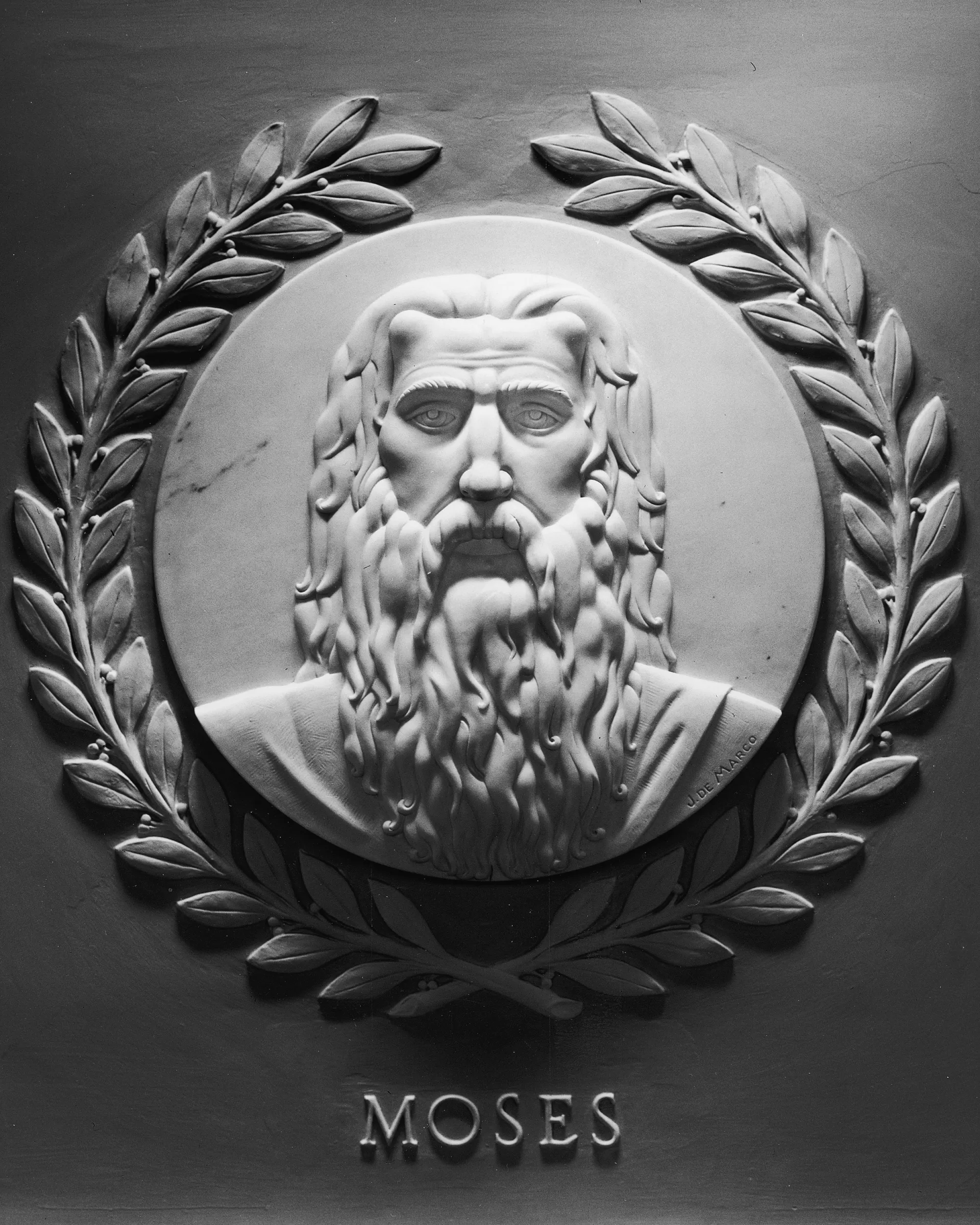
The 23 marble relief portraits over the gallery doors of the House Chamber depict historical figures noted for their work establishing the principles that underlie American law. Moses is the only one carved full-face, at the center. Every other lawgiver appears in profile — facing Moses.
Source: Architect of the Capitol, “Relief Portrait Plaques of Lawgivers.”
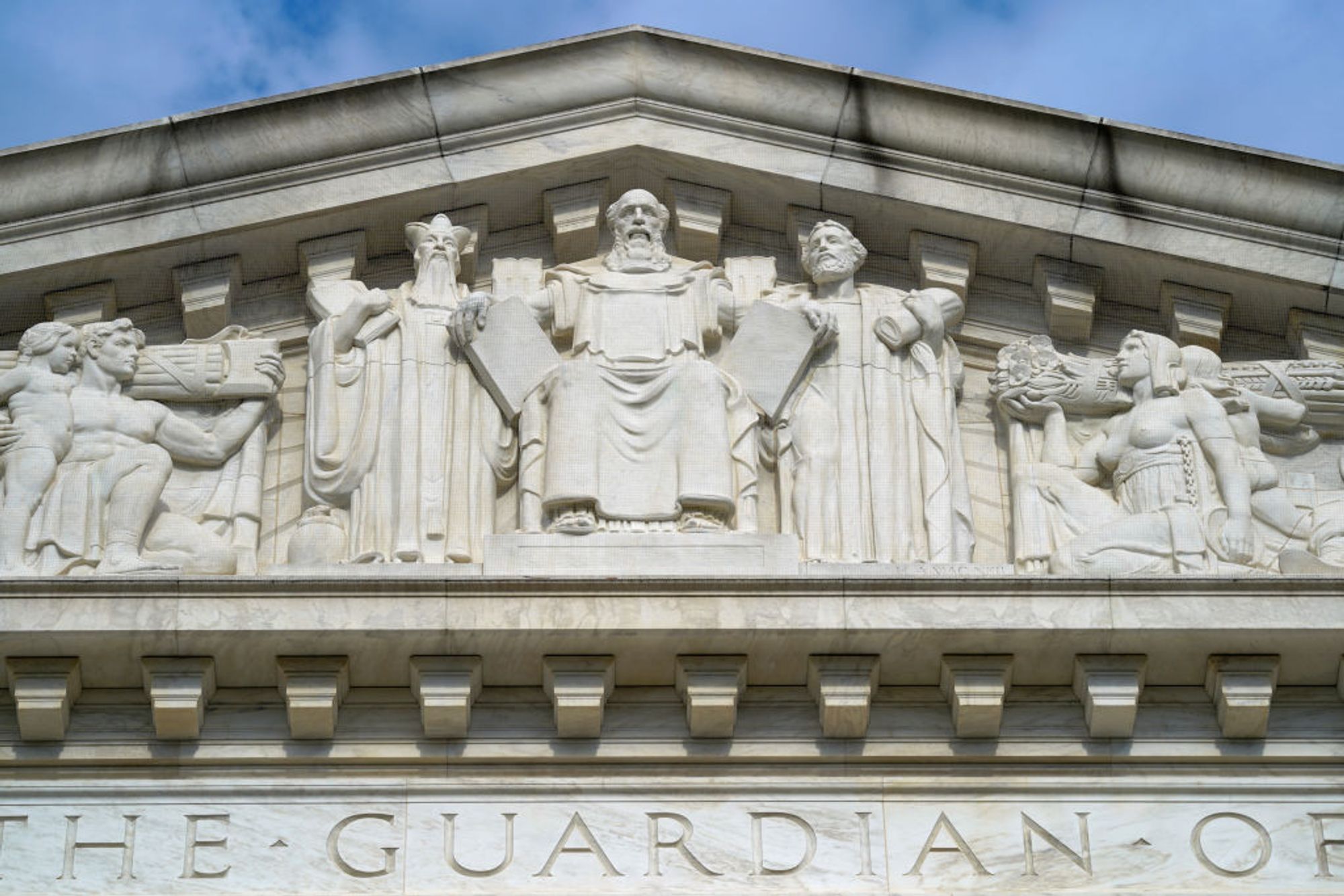
Moses at the United States Supreme Court — presented among the “great lawgivers of history,” holding the Hebrew tablets of the Ten Commandments.
Sources: Supreme Court, “Courtroom Friezes: South and North Walls”; Supreme Court Self-Guides to Interior and Exterior Architecture.
The Architect of the Capitol describes Moses as a Hebrew prophet and lawgiver. He is credited there with transforming a wandering people into a nation and receiving the Ten Commandments. He carries the idea that law can stand above ruler, office, priest, tribe, and public appetite. The symbol points to a legal architecture: authority under law.
The South Wall Frieze — part of the “Great Lawgivers of History” program — describes Moses as prophet, lawgiver, and judge of the Israelites. Mosaic Law is linked to the Torah; the tablets are in Hebrew.
The exterior medallions include Moses as a Hebrew lawgiver. This is not a synagogue reference — it is the highest court in the United States placing Moses in the lineage of law.
Source: Supreme Court, “Courtroom Friezes”; Exterior Self-Guide, perimeter medallions.
Hebrew prophet and lawgiver. Transformed a wandering people into a nation. Received the Ten Commandments.
The 23 portraits depict figures noted for establishing principles underlying American law. That is public legal memory, not decoration.
Source: Architect of the Capitol, “Moses, Relief Portrait” and “Relief Portrait Plaques of Lawgivers.”
Law is the thing that tells power: you are not the source.
This is the difference between law as command from power and law as a standard that judges power.
Greece. Rome. Magna Carta. Enlightenment. Constitutionalism.
Moses in the Supreme Court. Moses on the exterior medallions. Moses centered in the House Chamber. Magna Carta inside a medieval Christian legal chain.
The source figure remains visible while the source architecture is removed from the explanation.
The Supreme Court represents Magna Carta through King John holding the charter. The same legal chain often sold as secular development contains medieval Christian legal conflict: church freedom, oath, charter, king, and higher obligation.
Source: Supreme Court, “Courtroom Friezes: South and North Walls.”
Separation of powers, judicial review, standing laws, constitutionalism.
The lawgiver America literally placed in stone: Moses and Torah as source architecture.
Reality: Moses is recognized in U.S. legal symbolism.
Route: “rule of law” → secular genealogy → Moses excluded.
The modern story learned how to look at him — and still route around him.
U.S. Supreme Court: “Courtroom Friezes: South and North Walls” — Moses described as prophet, lawgiver, judge; Mosaic Law linked to Torah; tablets in Hebrew; King John with Magna Carta.
U.S. Supreme Court: Self-Guides to Interior and Exterior Architecture — Great Lawgivers program; Moses exterior medallion as Hebrew lawgiver.
Architect of the Capitol: “Relief Portrait Plaques of Lawgivers” — the 23 House Chamber lawgivers face Moses.
Architect of the Capitol: “Moses, Relief Portrait” — Hebrew prophet and lawgiver; Ten Commandments; nation-forming role.
Founding culture: Daniel Dreisbach / SHEAR on the Bible in American founding political culture.